Basic Testing for Fertility
If you have been trying to conceive and pregnancy has not happened as expected, basic fertility testing is usually the first step. These initial tests help identify common causes of infertility and guide the next stage of care.
Fertility challenges can involve female factors, male factors, or a combination of both. Early testing provides clarity and helps your provider recommend the most appropriate treatment plan.
When Is Basic Fertility Testing Recommended?
Fertility testing may be suggested when:
- You have been trying to conceive for 12 months without success
- You are over age 35 and have been trying for 6 months
- Menstrual cycles are irregular or absent
- There is a history of miscarriage
- There are known reproductive health concerns
- A partner has a history of male fertility issues
Early evaluation can help prevent unnecessary delays and provide peace of mind.
What Does Basic Fertility Testing Include?
Basic fertility testing typically evaluates both partners. The goal is to understand ovulation, sperm health, and whether the reproductive organs are functioning properly.
For Women
Hormone Blood Tests
Blood work checks hormone levels that regulate ovulation and egg development. This may include FSH, LH, AMH, estrogen, progesterone, thyroid hormones, and prolactin.
Ovulation Assessment
Confirms whether ovulation is occurring regularly.
Pelvic Ultrasound
Evaluates the uterus and ovaries. It can help detect ovarian cysts, fibroids, polyps, or structural concerns.
Ovarian Reserve Testing
Measures egg supply using AMH levels and antral follicle count.
Hysterosalpingogram (HSG)
A special X ray test that checks whether the fallopian tubes are open and the uterine cavity appears normal.
For Men
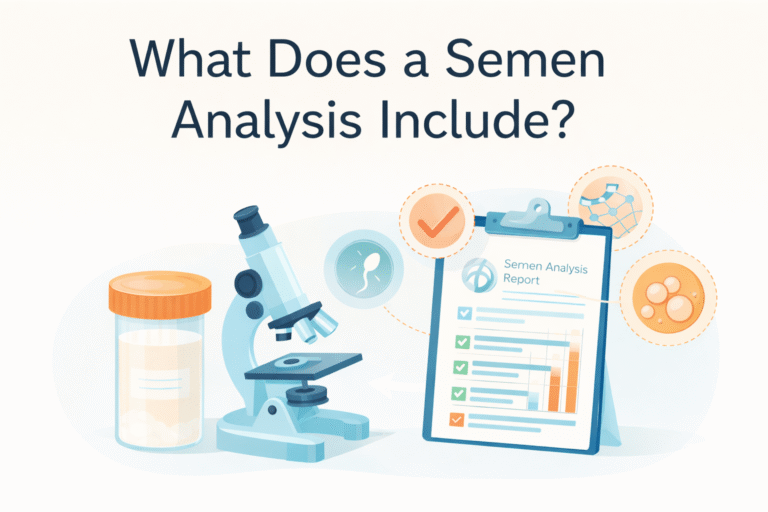
Semen Analysis
Evaluates sperm count, movement, shape, and overall semen quality.
Hormone Testing
In some cases, blood tests assess testosterone and other hormone levels that affect sperm production.
Physical Examination
May identify varicoceles or other structural concerns.
How Long Does Testing Take?
Many basic fertility tests can be completed within one menstrual cycle. Some tests must be performed at specific times in the cycle to ensure accuracy.
Your provider will guide you on timing and preparation so results are as reliable as possible.
What the Results Can Reveal
Basic fertility testing can help determine:
- Whether ovulation is occurring normally
- If egg supply is within an expected range
- Whether fallopian tubes are open
- If sperm count and motility are adequate
- If hormone imbalances may be affecting conception
In some cases, results are normal. This is called unexplained infertility, and your provider may discuss additional testing or treatment options.
What Happens After Testing?
Depending on the findings, your provider may recommend:
- Lifestyle and nutrition changes
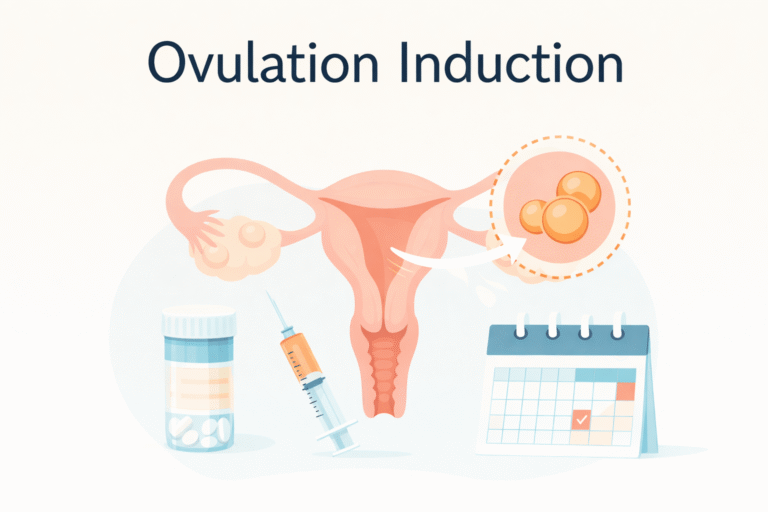
- Ovulation induction
- Intrauterine insemination (IUI)
- In vitro fertilization (IVF)
- Further advanced diagnostic testing
Basic fertility testing is an important first step. It provides direction, answers common questions, and helps create a personalized treatment plan.
Schedule Fertility Testing in Michigan
If you are ready to begin basic fertility testing, our team is here to support you with compassion, expertise, and clear guidance.
Serving Detroit and surrounding communities including Dearborn, Livonia, Novi, Ann Arbor, Troy, Sterling Heights, and nearby areas.
Contact us today to request an appointment and take the first step toward understanding your fertility.